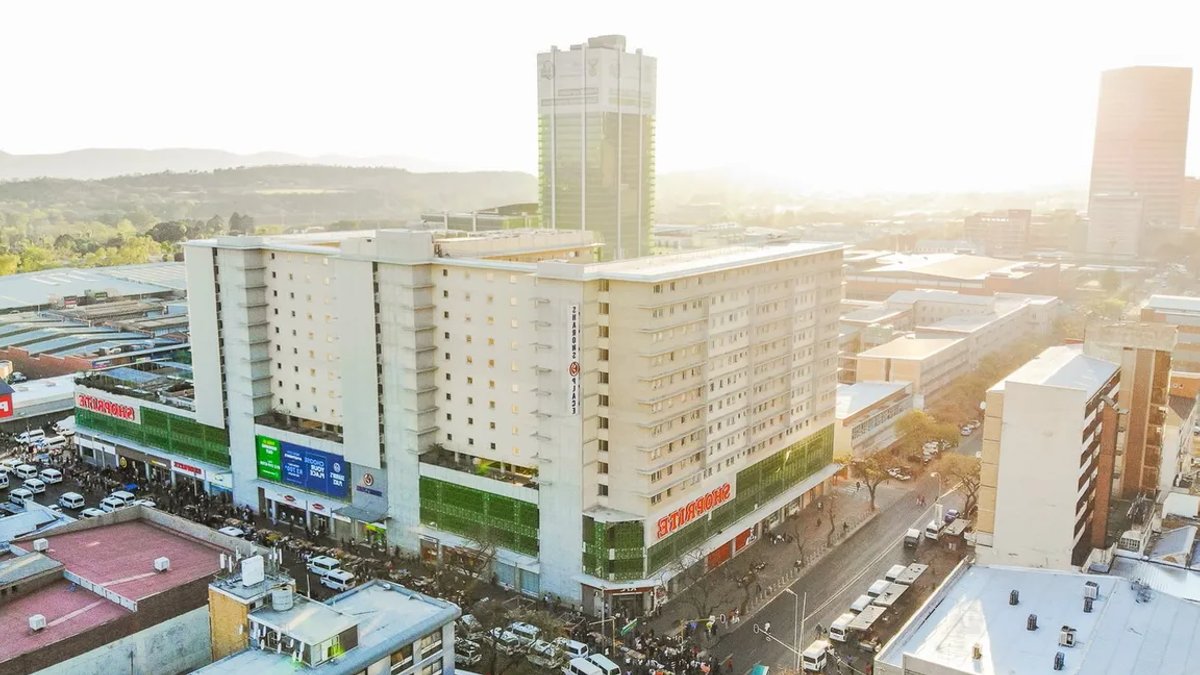
Octodec Investments reported a 12.2% rise in distributable income per share to 192.36 cents for the year ended 31 August 2026, while the total dividend climbed 11.5% to 149.97 cents per share.
Earnings and dividend growth
Revenue reached R2.23 billion, a 2.6% increase from the prior year. Net property income grew 4.2% to R1.01 billion, supporting the higher earnings per share.
Chief executive Jeffrey Wapnick said, “We made further progress in strengthening Octodec this year.” The board declared a final dividend of about 85.5 cents per share, bringing the annual distribution to the reported level.
Residential performance drives earnings
Rental income from the residential portfolio rose 6.5% to R594.7 million. Vacancies fell from 8.0% to 6.8%, reflecting stronger demand for affordable urban housing.
The Fields in Hatfield contributed a 14.1% rental increase, with vacancies dropping to 2.4% after converting 88 apartments to furnished units. Yethu City on Sisulu delivered a full year of rental income and earned EDGE Advanced certification.
Technology upgrades have shortened lease cycles and improved tenant screening, according to management. These tools helped achieve full occupancy at The Fields, which houses roughly 1,400 beds.
While Octodec’s focus on affordable rentals aligns with broader market trends, the strategy also mitigates risk by targeting properties that retain demand even during economic slowdowns. Concentrating on well-maintained units in established locations can generate steady cash flow without requiring large capital outlays.
Commercial assets showed mixed results. Rental income from shopping centres grew 6.0%, led by an 11.4% rise at Woodmead Mart. Occupancy across neighbourhood malls, excluding Killarney Mall, stood at 97% at year-end.
Office income slipped 2.2% and core office vacancies rose to 25.5%. Industrial earnings fell 6.8%, largely due to the vacant Talkar property.
Octodec continued its portfolio simplification by disposing of 20 non-core assets for R202 million. The sale of Killarney Mall on 2 November 2026 fetched R397.5 million, contributing to a weighted-average disposal yield of 9.1%.
Borrowings dropped to R4.07 billion, improving the loan-to-value ratio to 36.1%. Net finance costs fell 9.4% to R360.4 million, and the weighted average borrowing rate eased to 9.0%.
The company’s assets are now valued at R11.1 billion, encompassing 199 properties across Tshwane and Johannesburg, plus an equity-accounted joint venture.
Capital management and future outlook
Over the past two financial years, 37 properties were transferred, and agreements have been signed for an additional 10 assets with a combined carrying value of roughly R230 million; no new acquisitions were completed during FY2026.
Capital recycling funded R151.6 million of development, improvement and major tenant installation projects, while unutilised banking facilities totalled R1.23 billion.
Refinancing actions included R774 million of bank funding and the issuance of R300 million in unsecured corporate bonds. Deputy CEO and Financial Director Riaan Erasmus noted, “Asset disposals, cash retention and active treasury management have improved our financial flexibility.”
Future development pipelines target approximately R1 billion of investment in similar affordable residential schemes, with Yethu City slated for a proposed 500-unit expansion.
Guidance for FY2027 projects distributable income per share growth of 4 percent to 6 percent, alongside priorities to lower vacancies, complete further non-core disposals, pursue selective redevelopment and renewable-energy projects, and maintain disciplined funding. CEO Jeffrey Wapnick concluded, “We have clear priorities for the year ahead. By improving occupancy, releasing capital from non-core assets and investing selectively, we aim to build a portfolio that delivers dependable income and stronger long-term returns for shareholders.”


